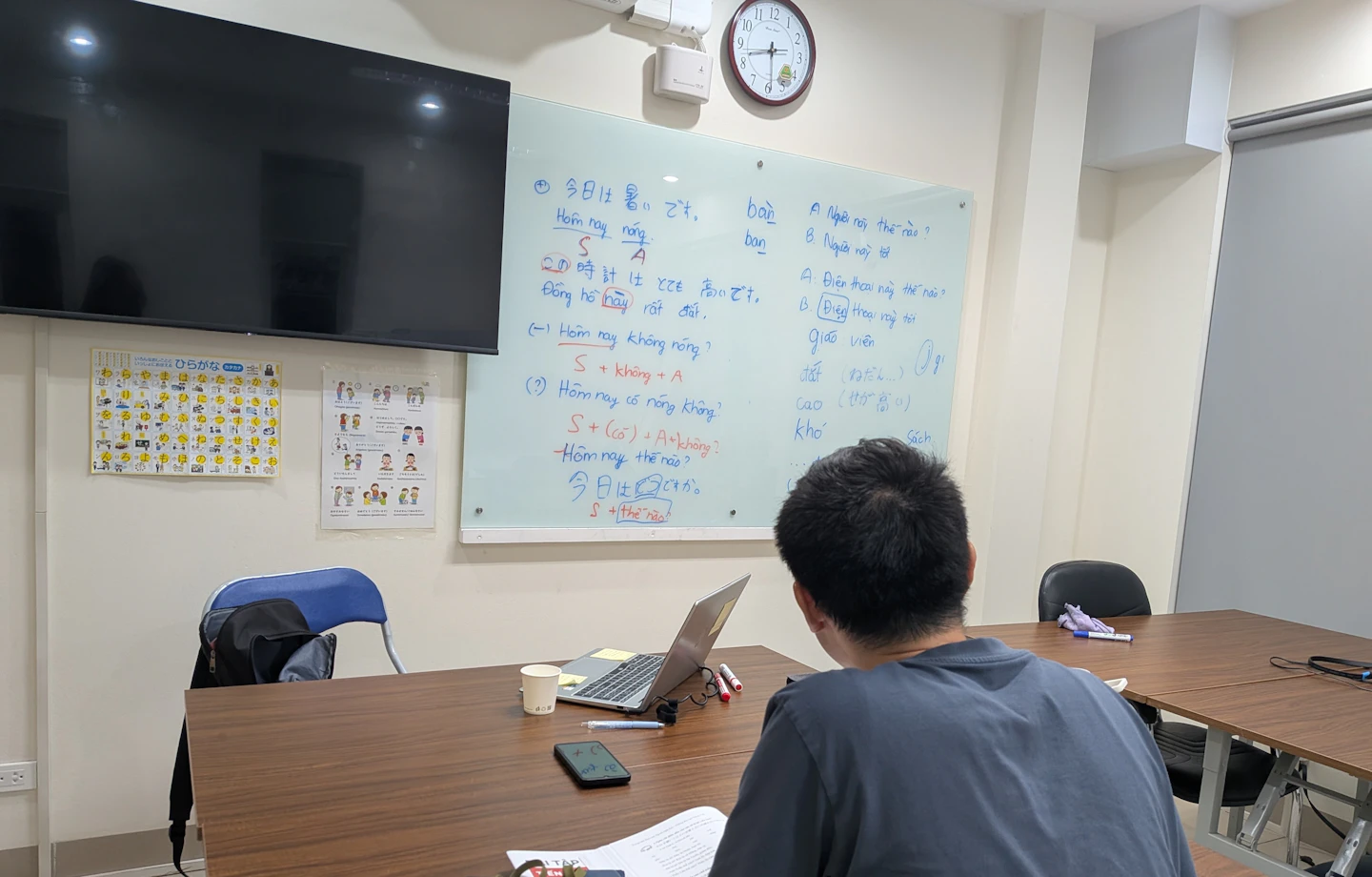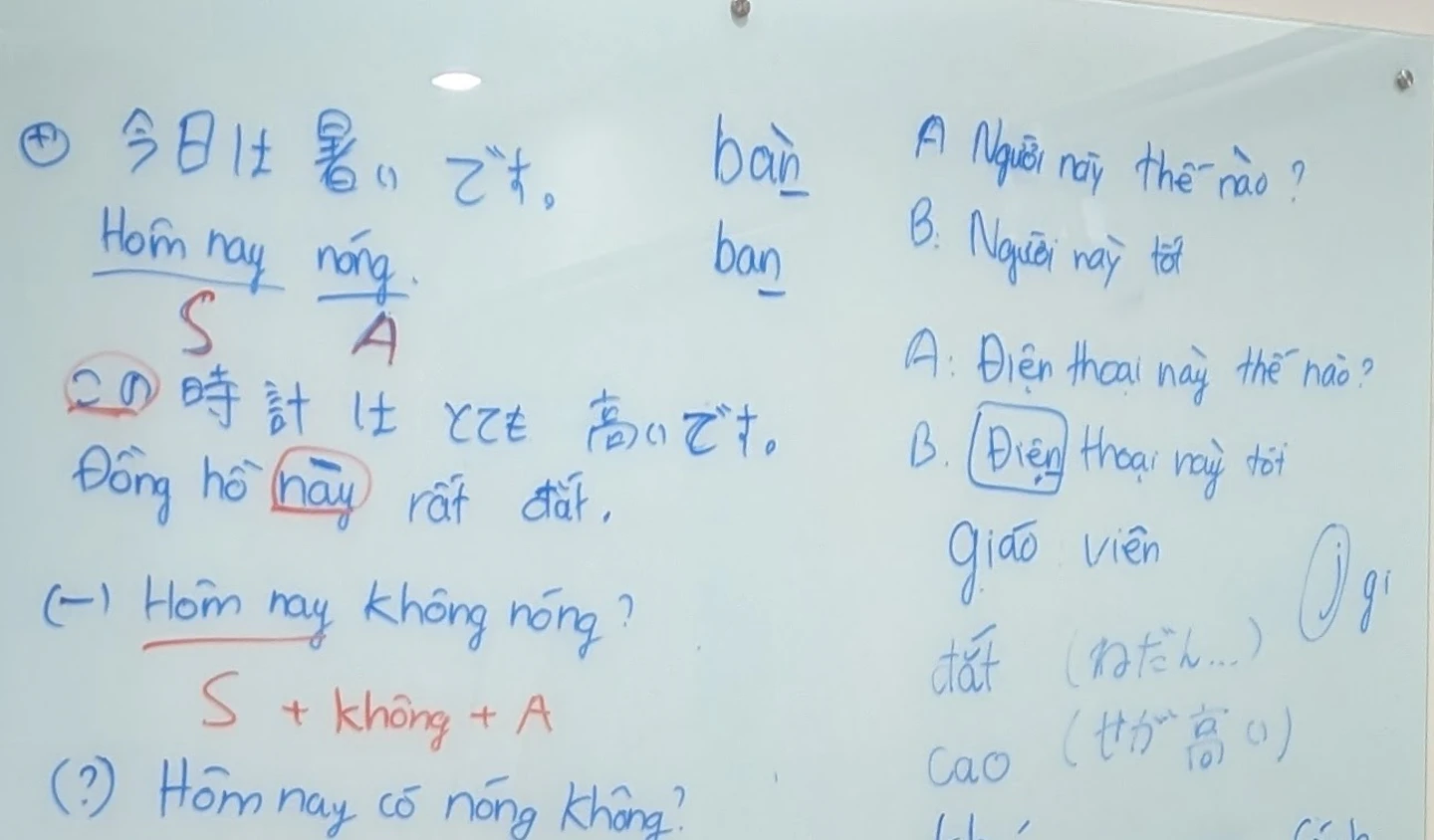
Right now, the self-improvement project I’m focusing on the most is learning Vietnamese.
According to statistics, it takes Japanese people about 800 to 1,100 hours of study to become fluent in Vietnamese. Even if I study two to three hours a day, that would take between one year and a year and a half. If you look at people’s experiences on video-sharing sites, you’ll see that it’s considered such a difficult language that “most Japanese people give up early on.”
Even so, I’m not learning it just for everyday life. Above all, it’s because I want to “have as many conversations as possible with my company’s staff in my own words.”
The Two Major Challenges of Vietnamese: “The Six Tones” and “Personal Pronouns”
What I realized right after starting to learn Vietnamese was just how uniquely challenging it is.
- The Six Tones (Pronunciation): The meaning changes completely depending on the rise and fall of the pitch (intonation). “Pronunciation” is the single most important key.
- Complex Personal Pronouns: You must choose the right words based on the speaker’s and listener’s age, gender, and relationship (based on family titles).
To tackle these high hurdles, I started taking one-on-one lessons (90 minutes) once a week at the end of April. It’s been about three months now, and after finishing the basics—such as the meanings of the alphabet symbols, mouth shapes, and how to produce the sounds—I’ve moved on to practicing simple conversations with my teacher.
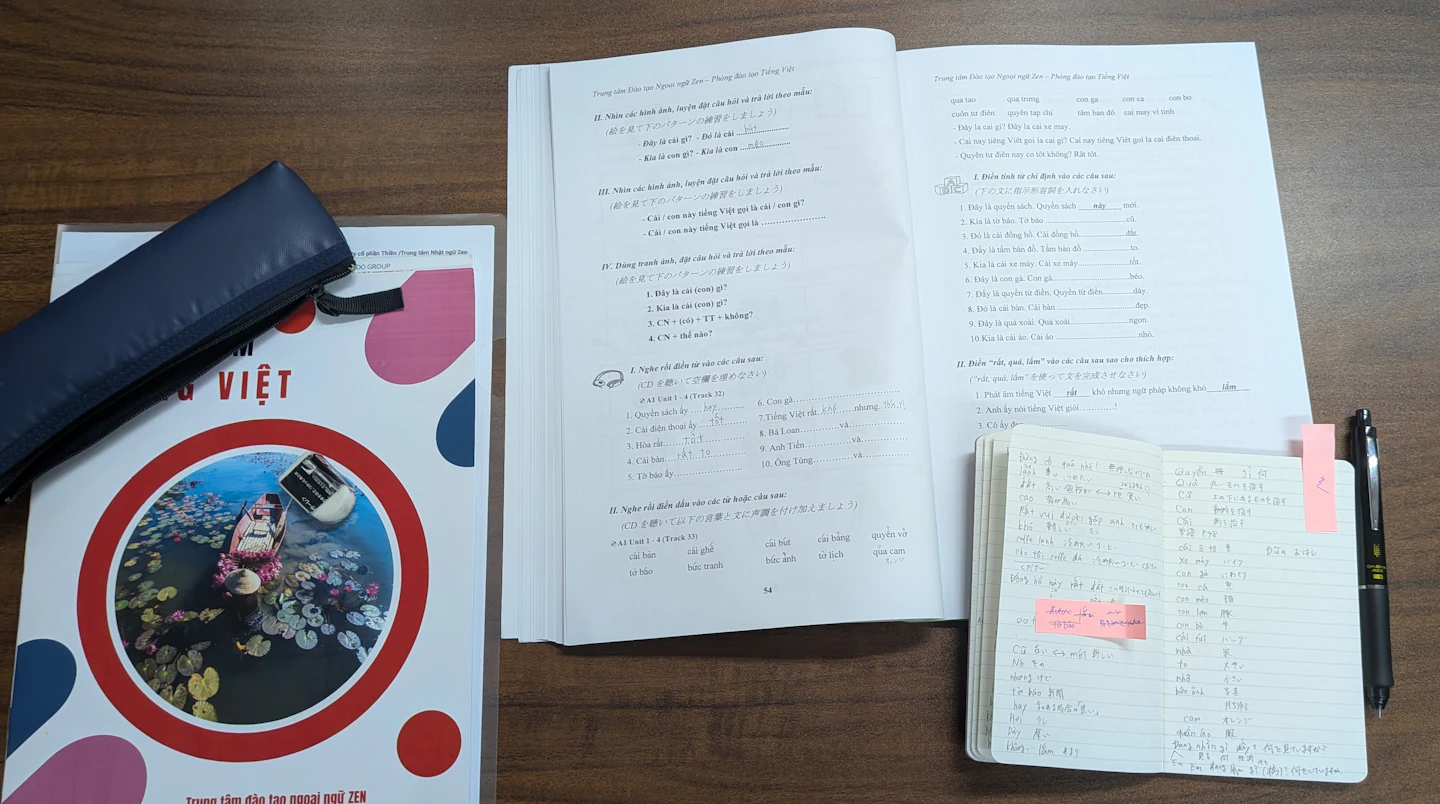
Putting Learning into Practice! A Shift from Days When I Was on the Verge of Giving Up
The best way to learn is to try what you’ve learned right away in real-life situations.
- Telling a Grab taxi driver where to drop me off
- Trying to place an order at a restaurant
- Trying to speak to staff at the office using the phrases I’ve learned
At first, even when I thought I was pronouncing things correctly, people would give me a “????” look, and I couldn’t make myself understood at all—I felt like giving up (lol).
However, as I kept speaking every day without giving up and practiced on my own at home by speaking into the Google Translate speaker to see if it recognized me correctly, I gradually started to see a change. Lately, I’ve been getting the responses I intended, and I feel a great sense of joy—it’s like “our hearts have connected through Vietnamese!”
Also, as I spend every day surrounded by Vietnamese, I’ve started to pick up words here and there from conversations among the staff. I’ve reached a point where I can imagine, “I wonder what they’re talking about right now?” and the joy of learning is growing more and more.
In Closing
I’m still in the “early stages” of what will be a long journey, but I’ll continue to enjoy the challenge of overcoming the language barrier.
“Consistency is key.” I’ll keep you updated on my progress (or perhaps my failures?) here on the blog, so I’d be thrilled if you’d continue to follow along and cheer me on!